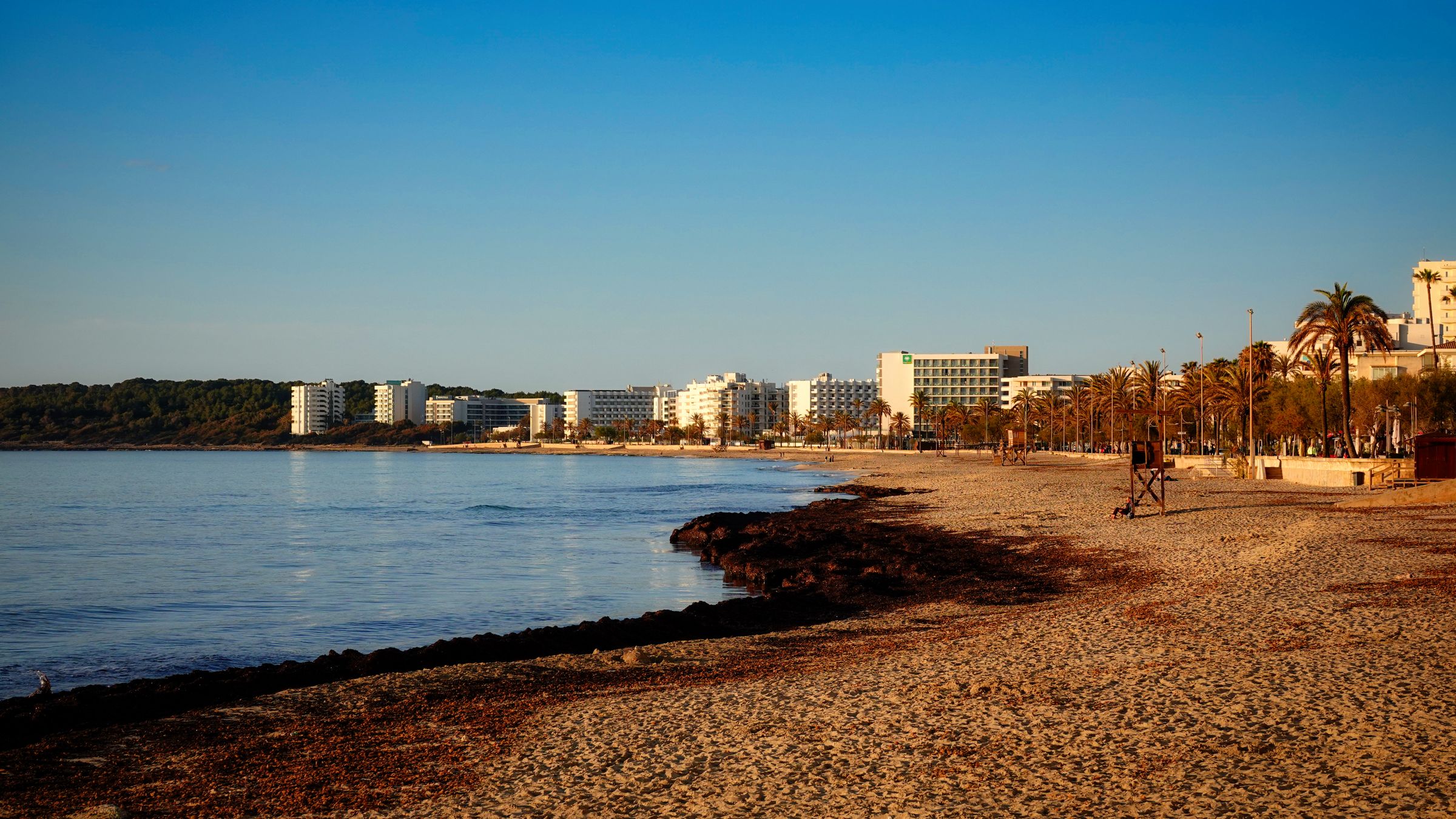
Salou runs about three kilometres from the old port to the Vila-seca boundary, and a reasonably fit adult walks the whole thing in forty minutes. That compactness misleads people. Inside those three kilometres sit a bar street that does not quieten until four in the morning, a residential grid where the loudest thing after eleven is a scooter, and a pine-backed headland that could pass for a different resort altogether.
Choose badly and no amount of good weather fixes it.
What actually decides this
Most people book on one variable: distance to the sand. In Salou that variable barely discriminates. Nothing in the built-up town is more than about ten minutes' walk from a beach of some kind, and the two large ones — Llevant and Ponent — sit either side of the centre like brackets.
Sound discriminates. Specifically: how far your window is from Carrer Carles Buïgas, which street the balcony faces, and whether the block has anything with a licence underneath it.
Walking tolerance comes second. Salou rewards people happy on foot and punishes those who are not, because the distances between the quiet parts and the busy parts are exactly long enough to become an argument at two in the afternoon in August.
The centre, and what it costs you
Book in the grid behind Platja de Llevant — roughly the streets between Passeig Jaume I and the top of Carrer Carles Buïgas — and you stop thinking about logistics for the rest of the week. Supermarkets, pharmacies, the tourist office, a hundred places to eat, the stops for the park and the coves, the Font Lluminosa running its water-and-light show on summer evenings: all of it inside a few hundred metres.
Parents who want to get children to bed and then sit on a balcony with a beer usually want to be here. So do people staying four nights rather than fourteen, who would rather not spend an hour a day walking.
What you pay for it is noise.
Carrer Carles Buïgas runs inland from near the fountain and carries the bulk of the resort's late bars. Sound does not politely stay on it. On an August Saturday the effective radius is two or three streets in every direction, and the last of it goes home around dawn.
A great many hotels and apartments here call themselves "central". In Salou that can mean a quiet block near the town hall, or a balcony forty metres from a sound system. Listings rarely distinguish. This is the single most common complaint about the resort, and it is nearly always a booking error rather than a bad hotel — which means booking blind in the centre, on the strength of the word "central" and a photograph of the pool, is a straightforward gamble.
Two streets is genuinely the difference. Ask the property which way the room faces, and look at the street on a map before you pay.
Further east, towards La Pineda
Walk north-east along the promenade and the town thins. Blocks stand taller and further apart, ground floors turn from bars into supermarkets and unhurried cafés, and somewhere before the Vila-seca boundary the strip stops feeling like a strip.
A large share of the family package trade sits along this stretch, and with reason. Beach access is straight across the promenade, the sand is at its widest here, and the volume at midnight is a fraction of what it is a kilometre back.
Cost: distance. From the far end, the middle of town is a twenty-minute walk along the front. Pleasant in June with an ice cream. Considerably less so in August with a pushchair, two tired children and shopping.
Ponent, and the streets behind the port
Past the old port, the mood shifts again. Platja de Ponent faces roughly west, making it the sunset beach and, late in the day, the warmer one. Behind it the streets are residential in a way the centre never is — buildings lived in year-round, a bakery queue speaking Catalan at eight in the morning, parked cars with local plates.
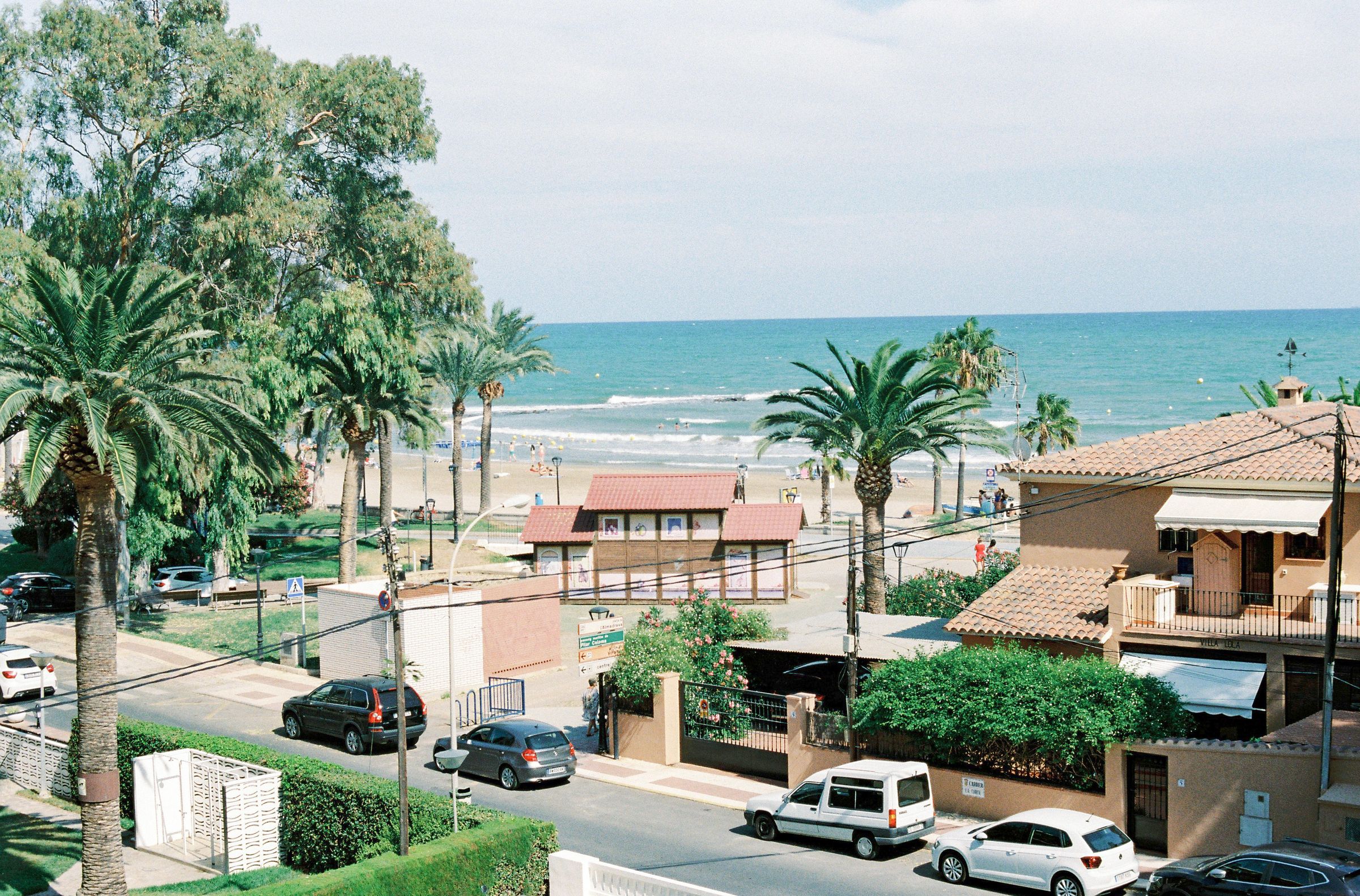
Ponent suits people who want the resort at arm's length rather than underneath them. Ten minutes on foot puts you in the middle of everything; ten minutes back puts you somewhere that has forgotten about it. Torre Vella, the squat sixteenth-century tower a few streets inland with gardens around it, sits on this side of town and is a useful reminder that Salou existed before charter flights.
Weak point: the beach is narrower than Llevant and busier with local families at weekends, and there are fewer large hotels, so the choice runs heavily to self-catering apartments.
Cap Salou, if you have transport
South of the town, the headland is the one part of Salou that does not look like Salou. Pines come down close to the water, the coast breaks into a run of small coves, and the buildings are lower, older and further apart. Anyone who has written the resort off should stand on this side of it once.
Genuinely peaceful. Also genuinely awkward.
Depending where exactly you land, the centre is two to three kilometres away, and the walk climbs — the road pulls away from the sea and the pavement gives out in places. A bus runs, but not often enough to build an evening around. Nobody staying here without a car, or a settled habit of calling a taxi, describes it as convenient.
Cap Salou is the right answer for two people who want to read, swim and eat one good dinner a day. It is the wrong answer for six people who want to be in the middle of things by nine.
Booking for the park
Inland, on the Vila-seca side, the theme park has its own hotels, plus a scatter of apartment blocks along the approach roads. If the week genuinely revolves around it — several park days, small children, early entry, an afternoon nap in the middle — the case is strong. You walk in, you walk back, and nobody has to be marshalled onto a bus at half past eight in the morning.
What you give up is a town. Eating is whatever the resort provides, at resort prices. The sea is a bus ride or a short drive. Evenings end when the gates do.
Most people are better served by staying in Salou and treating the park as a day out. The shuttle takes under fifteen minutes from the centre, and local trains stop at the park's own station. Two park days out of seven rarely justify sleeping beside it for the other five.
Five areas, side by side
| Area | Noise after midnight | Walk to the sand | Suits |
|---|---|---|---|
| Centre, behind Llevant | High, and unpredictable street to street | 2–5 min | Short stays, late nights, people who hate walking |
| East end of Llevant | Low | 1–3 min | Families wanting sand and sleep |
| Ponent and the port | Low, apart from the port itself | 3–8 min | Self-caterers, repeat visitors, couples |
| Cap Salou | Very low | Varies; some coves are steps away | Quiet weeks, with a car |
| Park side, Vila-seca | Low | Bus or drive | Trips built around the park |
Read the street name before you book
Five minutes with a map will tell you more than an hour of reviews. Worth checking, in this order:
- Where the property sits relative to Carrer Carles Buïgas. Under three hundred metres, assume you will hear it in July and August.
- Which way your room faces. A rear-facing room in a noisy block often beats a front-facing room in a quiet one.
- What occupies the ground floor of the building, and the two either side of it.
- The actual walking distance to a supermarket, if you are self-catering. Carrying water up a hill in Cap Salou gets old by Wednesday.
- Your month. Half of this note is irrelevant in May, when the bars are half-shut and the centre is calm enough for anyone.
One last thing to be honest about: Salou is a mass-market package resort, and no address makes it something else. What an address does control is whether you spend the week enjoying that fact or resenting it. Municipal information is published by the town council, visitor information by the Salou tourist board, and on-site accommodation details by the park itself.