Salou has an airport of its own twenty minutes away, and a good share of visitors still fly into Barcelona instead. The reasons are unglamorous and entirely rational: El Prat has vastly more routes, flies year-round rather than seasonally, and often costs less even after the longer transfer is priced in.
The trade is an hour and a bit of Catalonia on the way down. Handled well, that is a nap. Handled badly, it is the worst part of the week.
The shape of the journey
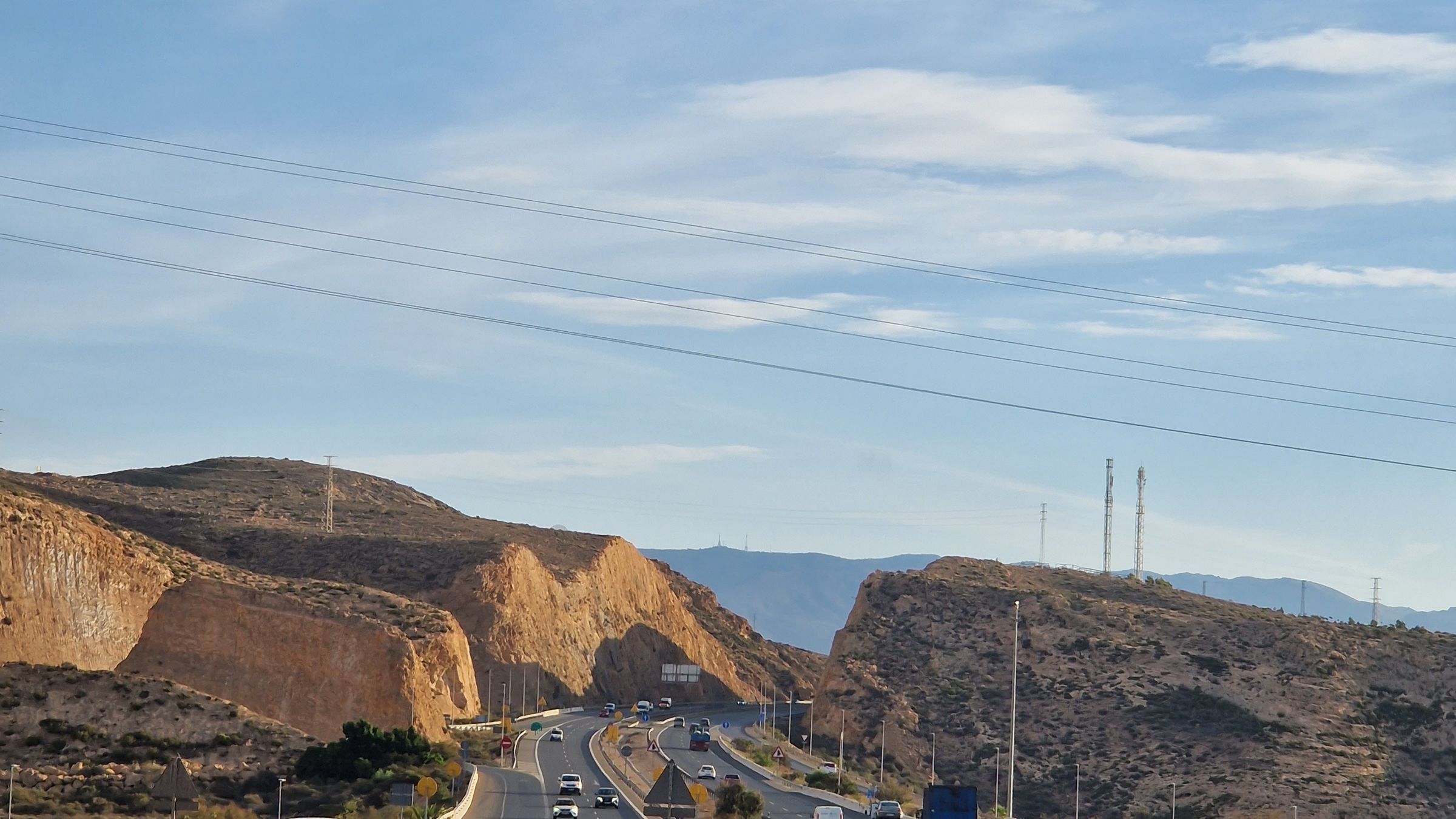
Roughly a hundred kilometres, most of it on the AP-7 running south-west along the coast through the Penedès and past Tarragona. In a car with clear roads it is about an hour and a quarter.
Nothing about the route is difficult. What varies enormously is how much of your own effort each option demands, and that is the real basis for choosing.
The direct coach
Plana runs a scheduled coach service from Barcelona Airport down to Salou, and for most people this is simply the right answer. It leaves from the airport itself, so there is no city leg to solve, and the fare sits in the mid-teens of euros — a fraction of any car.
Allow around an hour and three quarters to just under two, depending on the stops and the traffic. Services run many times a day through the season.
The weaknesses are the ordinary ones. It runs to a timetable, not to your flight, so a delayed arrival can mean a long wait in a terminal; and it puts you down at a stop in Salou rather than at your accommodation.
Check the departure times against your actual landing slot before you book anything else. A ninety-minute wait for a coach turns the cheapest option into the slowest one by a wide margin, and with children it turns it into the worst one.
A car, door to door
The fastest and least demanding option: about an hour and fifteen minutes, no changes, no waiting, and it ends at your address rather than a roadside.
It is also the most expensive by some distance, which is why airport transfers Barcelona to Salou attract so many operators — a hundred-kilometre run is a real journey with a real price attached, and the market for it is large.
Two situations make it obviously worth the money. Groups of four or more, where the coach fares add up and one vehicle absorbs everybody and their cases. And late arrivals, when the coach timetable has thinned out or finished and the alternative is a long wait or an improvised chain of trains.
The train, and the station that closed
This is where people come unstuck, usually because they are reading advice written before 2020.
Salou had its own railway station on the old coastal line for over a century. It closed on 13 January 2020, when the line through the town was taken out of service and traffic moved to a new inland alignment. The town is now served by PortAventura station, a short distance away beside the theme park, and the surviving stretch of the old route became part of the R17 line.
So the rail option, in practice, means a chain: the Rodalies service from the airport into Barcelona Sants, then a regional train south to PortAventura. Reckon on something over two hours in total, with luggage, and at least one change in a busy city terminus.
A second rail trap is worth naming. Camp de Tarragona is the region's high-speed station and it is not in Tarragona, nor anywhere near Salou — it sits inland and needs its own onward bus or taxi. Arriving there with a suitcase expecting to be at the coast is a common and expensive mistake.
None of which makes the train useless. It is a perfectly decent way to move around once you are settled — see the note on getting around. As an airport transfer with luggage, it rarely beats the coach on either time or effort.
The three, compared
| Route | Realistic door to door | Effort | Best for |
|---|---|---|---|
| Plana coach | 1 hr 45 – 2 hr, plus the wait | Low, one vehicle | Couples, budget, daytime arrivals |
| Car arranged ahead | about 1 hr 15 | None | Groups, families, late landings |
| Train via Sants | 2 hr 30 or more | High, a change with bags | Solo travellers, light luggage, rail fans |
What August does to all of this
The AP-7 in the first fortnight of August carries the whole of Catalonia towards the coast at once. An hour and a quarter becomes closer to two, coaches lose their slack, and every published time on this page should be read generously.
The corresponding advice is dull and effective: build in a buffer, do not schedule anything for the evening you arrive, and if you are landing at a peak hour on a peak weekend, take the option that does not require you to catch something.
Which to take
- Two adults, daytime arrival, hotel in the centre — the coach, and spend the difference on dinner.
- Four or more, or any hold luggage worth the name — a car arranged before you fly.
- Landing late, or on the last flight of the day — a car, without hesitation.
- Travelling alone with a rucksack and no fixed plans — the train is a perfectly good adventure.
Then forget all of it, because the transfer is the only genuinely tedious part of coming here. What follows — the long beach, the coves round the cape, the promenade in the hour before dinner — needs no logistics whatsoever.
Timetables and fares for the coach are published by Plana, rail services by Rodalies de Catalunya, and airport information by Aena.